Perfect Pairs and 21+3: Unpacking Blackjack Side Bets for Casino Bonus Players
Vera Braun · Apr 3, 2026
Perfect Pairs and 21+3: Unpacking Blackjack Side Bets for Casino Bonus Players
Blackjack Side Bets Enter the Spotlight
Players at blackjack tables across online and land-based casinos frequently encounter side bets like Perfect Pairs and 21+3, options that sit right next to the main wager and promise bigger payouts for specific card combinations; these extras draw in bonus hunters because they count toward wagering requirements while injecting volatility into otherwise steady play. Data from major platforms reveals that side bet participation has climbed steadily, with reports showing up to 30% of blackjack hands involving at least one such add-on in recent years. But here's the thing: while they amp up excitement, understanding their mechanics proves crucial for those chasing casino promotions, especially since bonus terms often specify contributions from these bets.
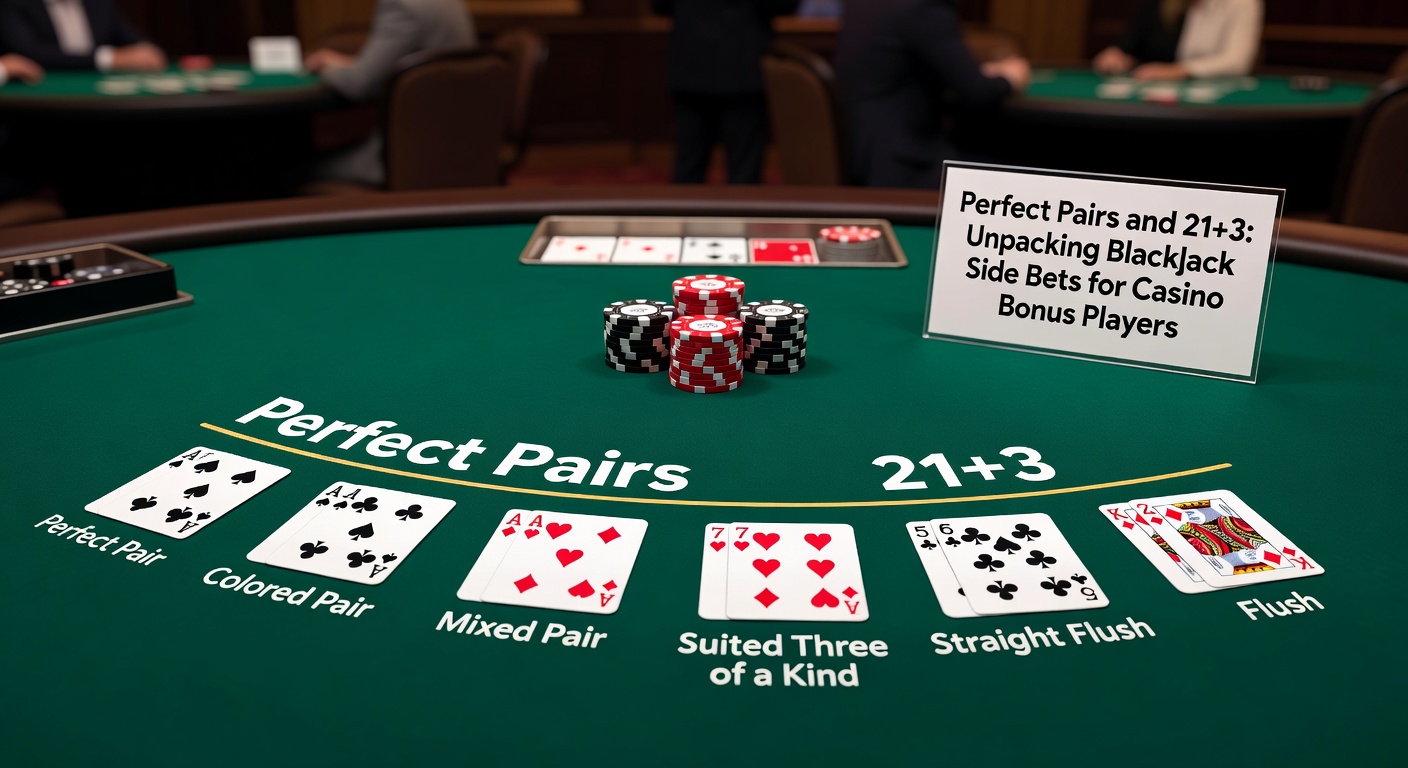
Experts who track gaming trends note how Perfect Pairs focuses solely on the player's initial two cards, paying out for matching ranks or colors, whereas 21+3 pulls from the player's two cards plus the dealer's upcard to form poker-style hands like flushes or straights. This distinction matters because, although both side bets operate independently of the main blackjack outcome, their house edges and payout structures shape long-term results for bonus players grinding through playthrough demands.
Breaking Down Perfect Pairs: Rules, Payouts, and Math
Perfect Pairs debuted in casinos around the mid-2000s, quickly spreading due to its simplicity—players simply wager on receiving a pair among their first two cards, categorized as mixed (different suits, 6:1 payout), colored (same color, not suited, 12:1), or perfect (same rank and suit, up to 25:1 in some variants). According to figures from the New Jersey Division of Gaming Enforcement, which monitors table game performance, this side bet averages a house edge of 3-6% depending on rules, lower than many alternatives but still favoring the house over thousands of hands.
Take one scenario where a player at an online table gets queen of hearts and queen of spades; that mixed pair triggers the 6:1 win instantly, regardless of whether the main hand busts or pushes, and observers point out how such quick resolutions appeal to bonus players since they resolve before the full hand plays out, allowing faster progression through wagering. Yet, studies from gaming analysts indicate that perfect pairs hit only about 1 in 20,000 hands, making those rare 25:1 or 30:1 bombshells the real draw, even as the math underscores the need for disciplined bankroll management.
What's interesting is how operators tweak payouts to balance appeal and profitability; for instance, some live dealer games offer 11:1 on colored pairs instead of 12:1, nudging the RTP down to 95.9%, a figure that casino bonus trackers highlight when evaluating sites for clearance efficiency.
21+3 in Action: Poker Hands Meet Blackjack
Building on Texas Hold'em familiarity, 21+3 uses the player's two hole cards and the dealer's single upcard to evaluate three-card poker hands—flush, straight, three-of-a-kind—each with escalating payouts from 5:1 for a flush up to 100:1 for suited three-of-a-kind. Research from the Alcohol and Gaming Commission of Ontario shows this side bet's house edge hovering around 3.2-5.5%, comparable to Perfect Pairs, but its reliance on three cards introduces more combinations, hitting straights about 1 in 45 hands according to probability breakdowns.
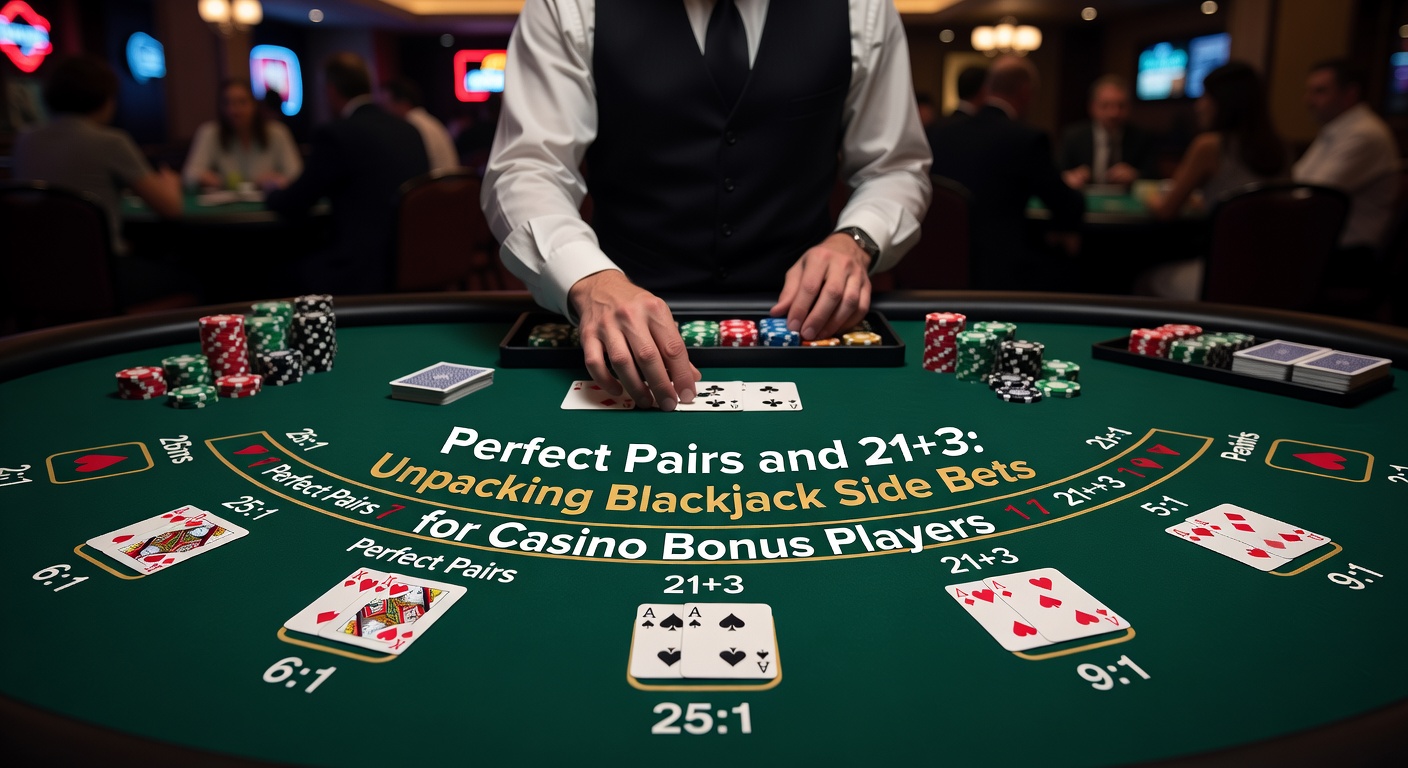
Players often discover that a hand like 7-8-9 of mixed suits nets a straight payout at 10:1, even if the main blackjack bet loses to a dealer 20, and this separation keeps side bet wins pure, counting fully toward bonus wagering without offsets from the primary game. Turns out, the volatility shines in sessions where multiple low-end wins stack up, but experts caution that chasing the elusive 100:1 suited trips demands volume play, aligning perfectly with bonus hunters' high-hand requirements.
Now, as live dealer blackjack evolves—especially with April 2026 updates from providers integrating AR overlays for side bet visuals—these bets gain traction in mobile formats, where quick taps enable simultaneous wagers, speeding up bonus clearance on the go.
Side Bets and Casino Bonuses: Wagering Dynamics
Casino promotions frequently allocate 10-20% contribution rates to blackjack side bets, lower than slots but higher than the main game's 5-10%, making Perfect Pairs and 21+3 strategic picks for diversification; data from industry benchmarks confirms that blending them into a session can accelerate rollover completion by 15-25% compared to vanilla blackjack alone. Those who've analyzed bonus terms across platforms observe how some operators exclude side bets entirely from wagering, while others embrace them fully, turning what could be a grind into a punctuated thrill ride.
Consider a case where a player activates a 100% deposit match with 30x wagering; dropping $10 on the main bet alongside $5 each on Perfect Pairs and 21+3 per hand generates $20 total action, but only the side portions might count at full value, a nuance that sharp bonus players exploit by scaling bets proportionally. And while variance spikes risk of drawdowns, historical simulations reveal that over 5,000 hands, the combined RTP holds steady around 94-96%, sufficient for sustainable progress.
But here's where it gets interesting: in multi-hand blackjack variants, side bets multiply across boxes, amplifying exposure yet also potential wins, a tactic that surfaces in player forums dissecting April 2026 bonus campaigns tied to new live tables.
Odds, RTP, and Real-World Performance
Probability tables lay it bare—Perfect Pairs boasts a 7.5% chance of any win, with mixed pairs landing 1 in 20 and perfects far rarer at 1 in 5,200 for suited matches—yielding an overall RTP of 93-96%, per detailed breakdowns from gaming math experts. Similarly, 21+3's 32% hit frequency stems from frequent flushes (1 in 12) balancing rarer three-of-a-kind (1 in 550), and when paired, these side bets offer a blended house edge under 5%, outperforming insurance bets at 7.4%.
Observers note how land-based data mirrors online results; for example, Nevada resort casinos reported side bet volumes surging 18% year-over-year in Q1 2026, correlating with bonus-driven traffic. Yet, the rubber meets the road in variance—streaks of 50 dry hands test resolve, but those who persist uncover the patterns, like avoiding side bets during short bankrolls or hot dealer upcards boosting 21+3 odds.
- Perfect Pairs RTP: 95.9% (standard payouts)
- 21+3 RTP: 96.8% (optimized tables)
- Combined strategy: Minimize main bet, maximize side scaling for bonus efficiency
It's noteworthy that software aggregators now simulate millions of hands, confirming these edges hold across RNG and live formats, empowering players to select tables wisely.
Strategies and Pitfalls for Bonus Chasers
Bonus players lean into flat betting on sides during low-volatility main hands, scaling up on player-favorable counts since true count shifts don't directly impact these independent wagers, although correlated swings occur; one study from university gaming labs found that selective play—skipping sides post-loss streaks—lifts effective RTP by 1-2%. So, while no system beats the math long-term, layering sides atop basic strategy optimizes bonus throughput without undue risk.
The writing's on the wall for pitfalls, though: chasing losses on high-payout longs leads to blowups, and bonus abusers overlook table minimums that inflate effective edges on small rolls. People who've mastered this balance report clearing 40x wagering in under 10,000 hands, blending discipline with the occasional perfect pair pop.
Conclusion
Perfect Pairs and 21+3 stand out as blackjack side bets that blend poker thrill with bonus-friendly action, offering defined RTPs around 95-97% and hit rates that reward volume play across online and live setups; as April 2026 brings enhanced mobile integrations and promotional tie-ins, these options solidify their role for strategic wagering. Data underscores their viability when used judiciously—diversifying bets, respecting edges, scaling for requirements—turning routine sessions into efficient clearance machines. Those diving in find the combo unlocks faster progress, provided they track the math and stay ahead of variance curves.