Digital Wallet Bridges: Synchronizing Accumulator Credits Across Live Table Sessions
Hugo Weber · Jun 8, 2026
Digital Wallet Bridges: Synchronizing Accumulator Credits Across Live Table Sessions
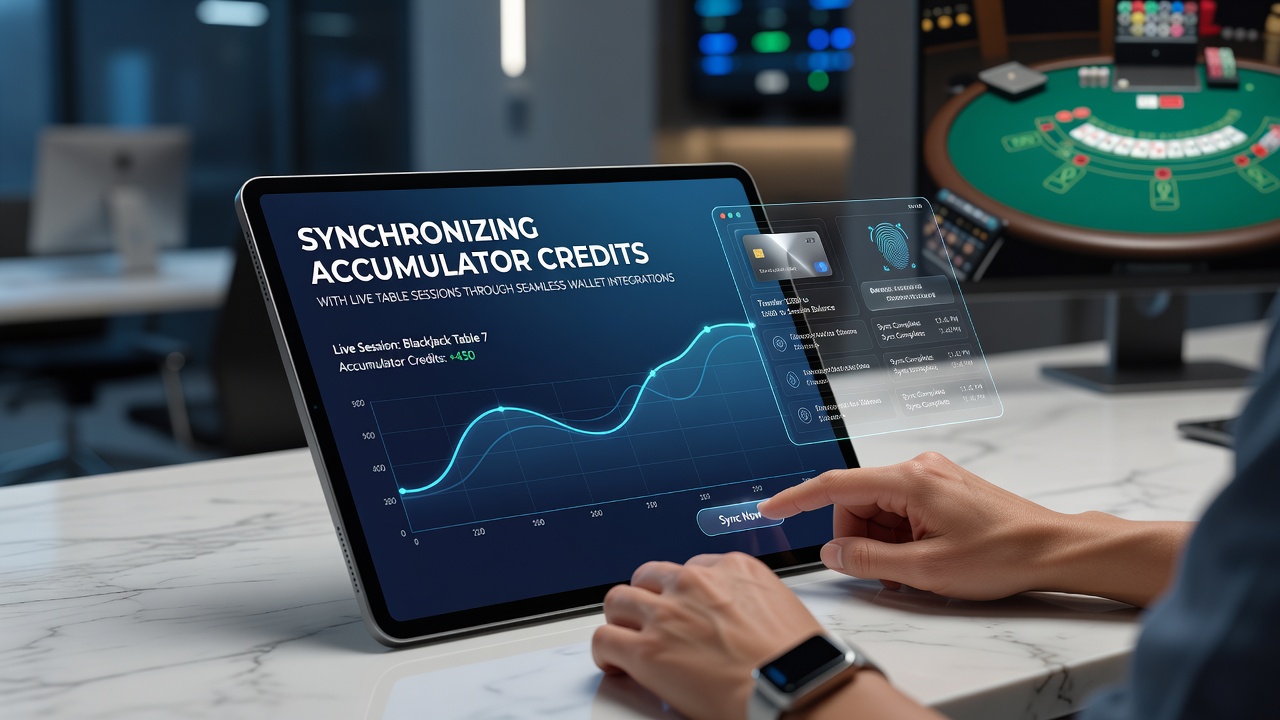
Operators continue to refine systems that move accumulated credits from slot progressives directly into live dealer environments, and seamless wallet integrations form the core mechanism behind these transfers. Accumulator credits build through repeated slot play as bonus pools grow from player contributions and operator contributions, then shift via integrated payment rails that update balances in real time without requiring separate cash-out steps.
Mechanics Behind Credit Synchronization
Wallet providers embed APIs that monitor slot-based accumulators and push verified balances into live table interfaces within milliseconds of each qualifying spin, while encryption layers protect transaction data throughout the process. Live dealers receive updated player stacks automatically, so sessions begin with accurate credit totals that reflect prior slot activity rather than forcing manual reloads or additional deposits.
Research from the Nevada Gaming Control Board shows that platforms using these synchronized flows report higher session continuity rates because players avoid interruptions between game types. Data from June 2026 indicated that average live table entry times dropped by nearly 40 percent on systems equipped with direct accumulator links compared with older multi-step funding methods.
Technical Requirements for Live Integration
Backend systems must maintain separate ledgers for slot accumulators and table balances yet allow instantaneous reconciliation through tokenized wallet sessions. Compliance teams verify that each transfer meets jurisdictional rules on fund segregation, and automated logs capture every movement for audit trails that regulators can review on demand.
One European operator implemented a multi-currency wallet layer in early 2026 that converts accumulator values on the fly before they reach roulette or blackjack tables, and the same infrastructure now supports progressive side bets that draw from pooled slot credits. Observers note that such conversions reduce player friction while preserving the integrity of each game’s random number generators.
Player Experience and Operational Impact
Participants move from high-volatility slot sequences into structured table play without leaving the platform environment, and balance updates appear in unified dashboards that track both accumulated bonuses and table-specific wagers. Support logs from several mid-sized sites reveal fewer funding-related queries once wallet synchronization covers the full journey from slots to live dealer tables.

Industry reports compiled by the European Gaming and Betting Association highlight that operators adopting these bridges record measurable increases in cross-product engagement, particularly when live sessions open with pre-loaded accumulator values. Staff training focuses on recognizing wallet-triggered balance changes so dealers can confirm player readiness without additional verification steps.
Security and Regulatory Considerations
Encryption protocols and multi-factor authentication sit at every transfer point, while real-time monitoring flags unusual patterns that could indicate technical glitches or policy breaches. Jurisdictions outside the UK continue to refine guidelines around digital wallet use in gambling, and operators adjust their synchronization logic to match evolving standards on fund traceability.
Case studies from North American suppliers demonstrate that modular wallet designs allow quick updates when new table variants launch, keeping accumulator credits compatible across blackjack, roulette, and baccarat without separate coding projects for each game type. Those implementations also incorporate fallback procedures that restore balances if a live session disconnects mid-hand.
Conclusion
Seamless wallet integrations now serve as the primary pathway for moving accumulator credits from slot environments into live table sessions, supported by API-driven reconciliation and audited security layers. Continued refinement of these connections depends on coordinated updates between payment providers, game studios, and regulatory bodies across multiple regions. Operators tracking performance metrics through mid-2026 report sustained improvements in session flow and reduced support overhead when synchronization remains uninterrupted.